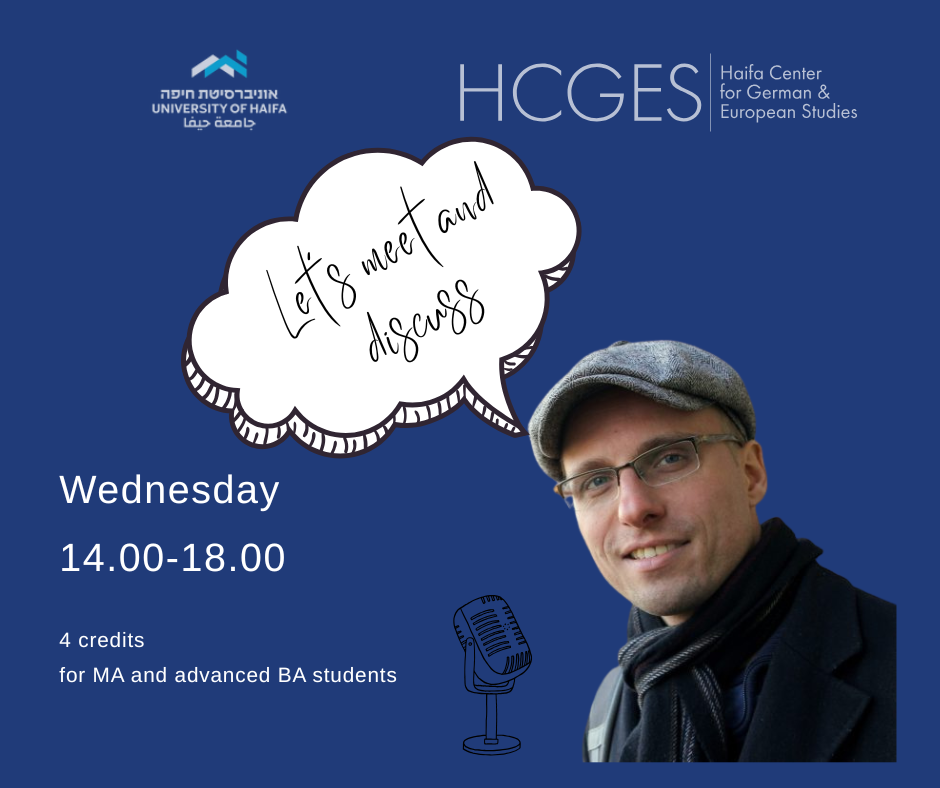
Who can apply: MA students, advanced BA-students
Course language: English
Format: hybrid (online / in person)
Credit points: 2
Dates: Semester B (March-June 2026), Wednesday 14.00-18.00
If you need more details or to enrol in the course, please contact Student Coordinator HCGES Polina Fainbark by email: pfainbark@staff.haifa.ac.il
What does it mean to write history through living voices? How do personal memories become historical sources — and how can historians work with them ethically, creatively, and critically? This course offers a hands-on introduction to oral history, centered on a compelling case study: German-speaking Jews in Palestine and Israel (Yekkes). Students will engage directly with life stories, memory, and intergenerational transmission — and learn how history is shaped not only by documents, but by voices.
What you’ll gain:
– Practical training in oral history methods
– Experience in interviewing and working with personal testimonies
– Insight into how oral history is used in research, museums, documentaries, and public history
– Skills in transforming historical material into audio storytelling.
As a final project, each student will plan, record, and edit an original interview with descendants of German-speaking Jewish immigrants in Israel, culminating in a short historical podcast produced by the students themselves.
So if you want to know how to organize and record a real podcast, you will get real instructions. Along the way, we will explore the history of German-speaking Jews who arrived mainly in the 1930s, the tensions they encountered in the Yishuv and early Israeli society, and the changing meanings of German-Jewish heritage over time.
It is a perfect opportunity for students interested in:
Social and cultural history | Memory studies | Public history | Digital & audio storytelling.
🎙️ If you’re curious about history that listens, asks questions, and gives voice — this course is for you.
You can find the Syllabus here.