

Every year, our students take part in the Erasmus program and spend a semester at one of our partner universities across Europe. This experience is much more than studying abroad — it is an opportunity to step into a new academic culture, discover different perspectives, build international friendships, and grow both personally and professionally.

Throughout their exchange semester, our students immerse themselves in local life, explore new cities, and challenge themselves in unfamiliar environments. We stay in close contact with them during this exciting journey and invite them to share their reflections, impressions, and personal stories. Their experiences not only capture the spirit of Erasmus but also inspire future students to embark on their own exchange adventure.

Here you can read their voices, insights, and memories from their time abroad.

First, I would like to clarify that my second semester is an exchange semester. The main difference is that I am no longer receiving a scholarship and am funding my stay myself. Otherwise, the experience has remained very similar to Erasmus+.


Why did you choose the University of Tübingen for your exchange?

I chose the University of Tübingen because of its excellent academic reputation, its wide range of courses, and the opportunity to study in one of Germany’s most renowned university towns. I was also eager to experience the German higher education system and study in an european international environment.

What made you decide to stay for a second semester?

This has truly been a unique experience, and I simply wanted to extend it. During my first semester, I fell in love with Tübingen, its atmosphere, and the people I met here. I built a wonderful community, and the city has started to feel like home. In addition, my master’s thesis is connected to the Baden-Württemberg region, so staying longer is also academically beneficial. I also wanted to take several courses that were only offered during the summer semester, and, of course, I wanted to continue improving my German.

Looking back, how did your second semester differ from the first?

My second semester has felt completely different. I experienced Tübingen across different seasons, with a different atmosphere and mood throughout the city. There are new people, new friendships, and new opportunities. At the same time, the university system has become very familiar to me. I already know how everything works, where to find information, and how to organize my studies. 

What is something about Tübingen or Germany that international students usually don’t discover unless they stay longer?

I think that after spending more time here, you begin to see Tübingen not only as a beautiful university town but as a place to truly live. You gradually discover local traditions, seasonal events, and hidden corners of the city. Over time, you start feeling like part of the local community rather than just a visitor.

Tübingen has a completely different atmosphere in spring and summer than it does in autumn and winter, and staying for a full academic year allows you to experience the beauty of each season.

Did living in Germany for a longer period change any of your expectations or stereotypes about the country?

This is a particularly interesting question because I actually explored this topic during an intercultural communication course that I took in German. The course included discussions led by the professor and German-speaking tutors (course assistants), and we spent a lot of time reflecting on stereotypes and cultural differences. Living in Germany helped me move beyond many common stereotypes. Before coming here, I expected Germans to be very formal and reserved, but my experience has been quite different. I have met many kind, warm, funny and open people who are always willing to help. At the same time, I also discovered that some stereotypes have a grain of truth; for example, Germans do value organization and planning, although even here there are exceptions: Deutsche Bahn has definitely taught me that punctuality is not always guaranteed! 🙂

I also realized how diverse Germany is. Each region has its own traditions, culture, and identity.

Have you already returned to Haifa, or are you still in Germany?

I am still in Germany, but I am already looking forward to returning to Haifa for the autumn Jewish holidays.

Having studied in Russia, Israel, and Germany, what differences do you see between these higher education systems?

Studying in three different countries has given me a unique perspective on higher education.

What I appreciate most about Germany is the level of academic freedom and independence students are given. There is great flexibility in choosing courses and shaping your own academic path. Professors treat students as future colleagues and encourage discussion, critical thinking, and independent research.

In Israel, I was particularly impressed by the openness and accessibility of professors. The relationship between students and faculty feels much less formal, creating a supportive and motivating learning environment. I also appreciate how closely universities are connected to current research and practical applications.

My education in Russia gave me a very strong theoretical foundation and taught me discipline. It provided a solid academic base, especially in theoretical subjects, which continues to be valuable today.

Has your exchange experience influenced your future academic or career plans?

Absolutely. Studying abroad has had a profound impact on both my academic and professional goals. It strengthened my desire to pursue an academic career and remain involved in research. I hope to continue participating in international projects, collaborate with researchers from different countries, and keep exploring new academic and professional opportunities
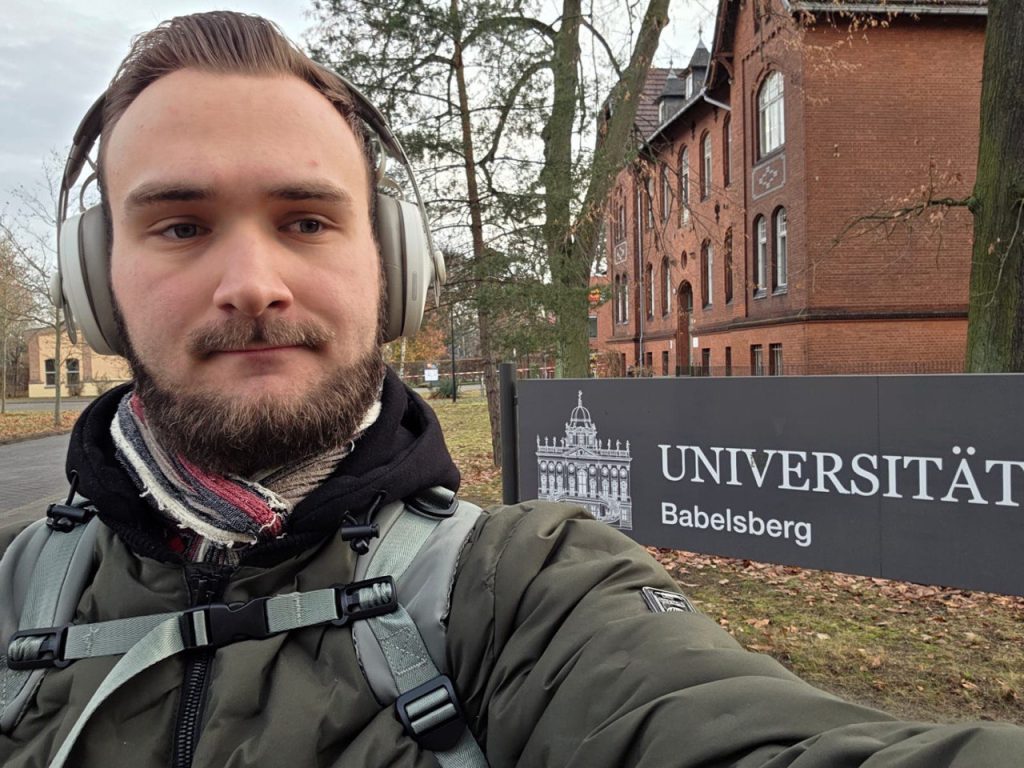
Hello from Potsdam!

Currently I am at the University of Potsdam. I’ve enrolled in two courses devoted to Social Media Research Methods, which can be applied in the social sciences. The Social Media Research course is general and devoted to various aspects of social science methodology; Social Media and Elections is focused on statistical methods in political science. My studies are going successfully. I haven’t faced any significant challenges yet, but I think that the further it goes, the more difficult it will be to cope with the workload as the course tasks become more complicated.

I am also studying German at the A2 level to improve my oral skills, which is crucial for life in Germany. It will also help me with further analysis of German sources, which I will use in my thesis.

Life in Germany I generally like, although it certainly has its specifics, ranging from the weather to the local bureaucracy with which you have to interact.

 
Sincerely,
Andrei

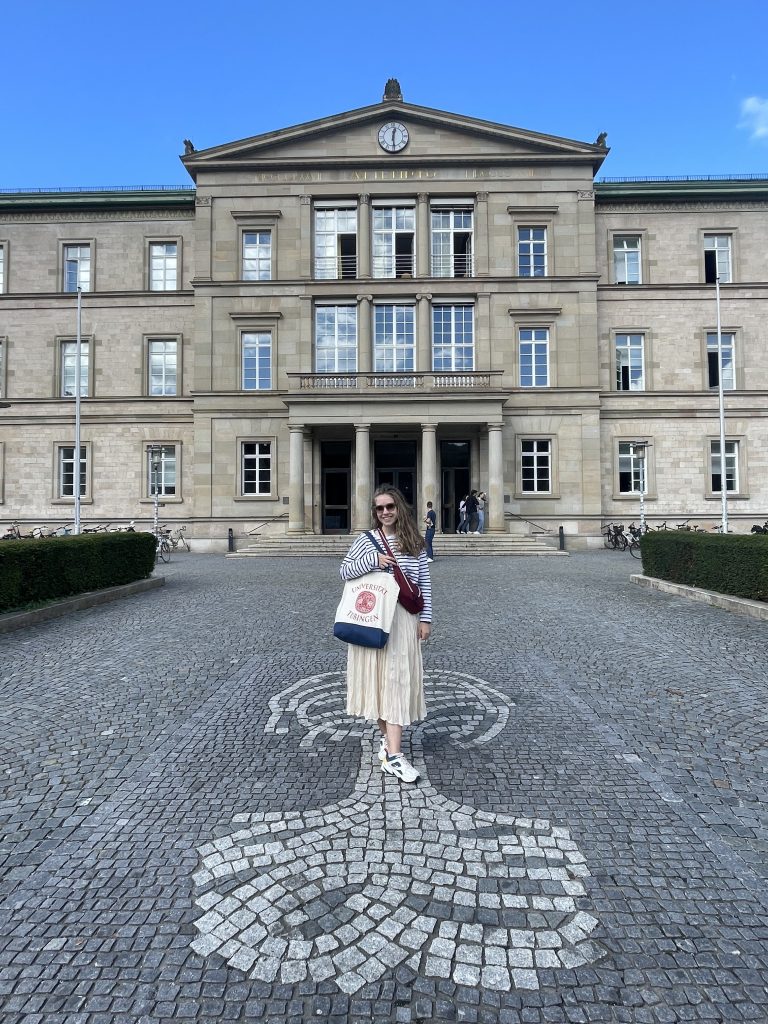
I am spending the semester in Tübingen, Germany, as part of the Erasmus+ program. Although I am formally enrolled in the German Studies department, I am taking courses across several faculties to meet the requirements of my Master’s program at the University of Haifa. My academic schedule is intensive, with multiple German language courses each week both theoretical and practical, as well as classes in Political Science (Art in International Relations) and Sociology (Conspiracy Theories, Social Inequalities and Identities). The latter is especially challenging and enriching, as it combines theory with hands-on empirical work, including data analysis and coding.

Studying in Tübingen requires a significant amount of independent work, and I spend many hours in the University library. There is no single campus here; Tübingen is a true student town, and University buildings are spread throughout the city, creating a unique academic atmosphere.

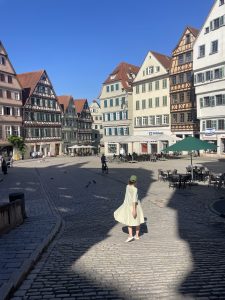
Life in Tübingen is deeply impressive. The city looks almost like something out of a fairy tale, it was barely damaged during the WW2, and many historical buildings have been preserved in their original form. The sense of historical continuity is very strong here. With my background in Holocaust Studies, I find it striking how present the past is here. There is a small Jewish museum, created through a Christian initiative, exhibitions in the city museum dedicated to Tübingen during the Nazi period, and informational pillars throughout the city with photographs and explanations of what stood at each location during the war. Alongside the Stolpersteine and the remains of the fundament of the synagogue destroyed during Kristallnacht in 1938, this attention to historical detail and memory about the past itself is truly remarkable.

Overall, my Erasmus+ experience is exceptionally inspiring so far. It brings together study, language immersion, independent study, and a deep engagement with the history of the place, which is inspires me for my future academic career.

Sincerely,

Daria Ruth Kubrina

Hello, I am Yao!

My Erasmus exchange is taking place at the University of Tübingen in the southwest of Germany, and my host faculty is the Department of History. My Erasmus studies are going very well. I am mainly focusing on learning German and collecting historical sources in different archives and libraries in Germany in order to write my thesis. This semester, I have chosen several German language courses and one course in International Relations.

Life in Tübingen is very good. It is a very comfortable and beautiful university town, where the long history of the city and the energy of the young students combine in a perfect way. For Erasmus students, it is possible to live in the university dormitories, and the university canteen is also very good. In our studies, we can choose courses from different subjects, and there is a wide range of interesting classes to attend.

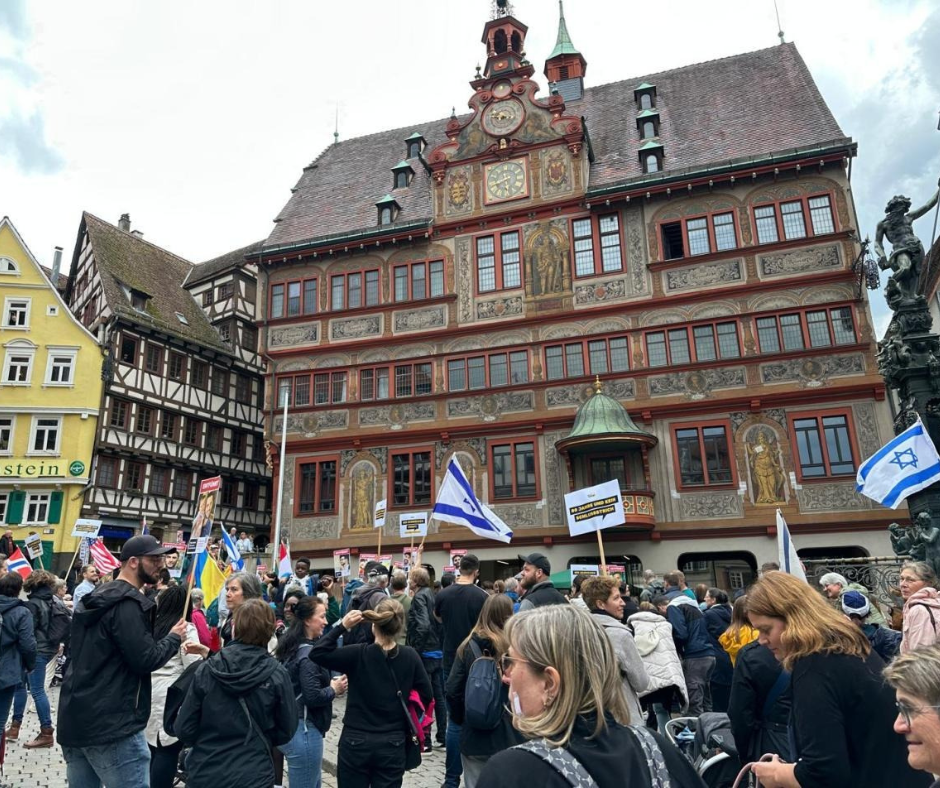
This year, I joined two demonstrations and a concert in the city in support of Israel that were organised by my local Christian friends. During these events, I also met many new friends, and I stay in close contact with the local German-Israeli Association (Deutsch-Israelische Gesellschaft).